
“Math Trauma” Is Real (And It's Not Your Fault)
Why so many adults still flinch at the word “math” — and how to make sure your child's story turns out differently.
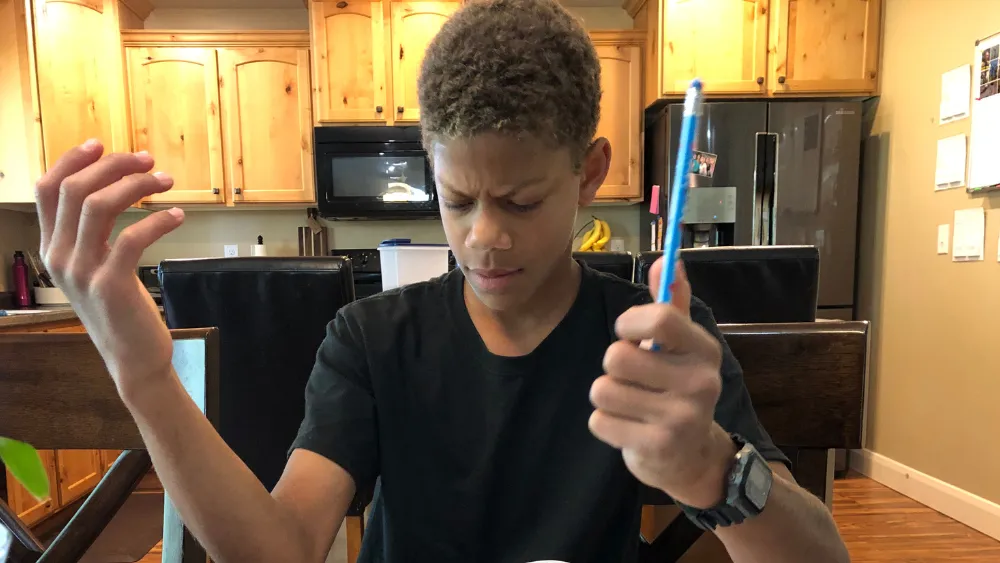
What is it about math that gives it so much power…
- To make kids feel inadequate and insecure about themselves,
- To cause wounds to self-worth so big that the debilitating effect lasts into adulthood, and
- To put parents and kids at odds with each other until they don't even like each other anymore.
Woah. That is a lot of power.
Being in the business of solving these precise math problems (oh yeah, and the kids will learn their times tables and division facts like nobody's business) puts us in a unique position to hear an endless supply of stories.
All people have to do is hear briefly what we're up to and they're eager to tell us their own “math trauma” story — quite often accompanied with some very deep emotion.
You may feel alone in how much it affected you, or how worried you are about your child. But this trauma affects more people than you can imagine. Why have we ignored this problem as a society for so long when so much damage is being done?
The Three Types of Math Trauma
Type #1: The Insecurity That Creates “Dumb” Labels
Math is a hotbed for labels. I happened to be categorized as one of the “smart” kids simply because I did well at math. I saw a lot of trauma around me but I didn't relate to it — until I was in college taking a French class.
The teaching style there was different and suddenly I was one of the “dumb” ones. First I was confused (wait, I'm supposed to be smart!), then sad (What is wrong with me?), then angry (There's no way I can keep up!).
I remember folding my arms, sliding down in my chair, and checking out of the class. I felt ashamed of myself, mad at the students who were doing well, and hateful at my teacher for… I don't know, existing!
Then I remembered. The body language of those kids growing up who didn't do well at school looked just like mine did right then. My heart poured out to every single one of them.
Type #2: The Lasting Effect of Negative Labels
I had a friend I thought was just brilliant — creative, organized, chock full of talent. But she made comments about how she wasn't very “smart” or “quick,” that she was a “slow learner.” It made no sense to me.
Finally I asked, “Why in the world do you believe you're not smart?” It turned out she “didn't do very well in school… well, mostly in math.”
Then I began to notice this more and more. The root source of a lack of belief in self far too often stems from the early math experience.
Sometimes the “I'm not smart” label is self-imposed just from the way math makes the child feel; other times it's a fellow student or a teacher whose words got stuck in the child's psyche, making them doubt their abilities from then on.
“I was one of the dumb kids when it came to math. It took me years to realize that I loved to learn and I was a lot smarter than I ever thought I was! I got all choked up when I saw your program this morning! God bless you and the MathHacked Girls! — Ben Smith, Grandpa”
One woman who came up to us at a homeschool conference said she had a form of PTSD from her early math experience. We laughed; she didn't laugh with us. She was dead serious — and willing to do just about anything to save her kids from the same fate.
If your child is currently dealing with an “I'm not smart” label because of math, something should be done to correct that false label, or it will last a lifetime. And there is something that can be done — it takes about 15 minutes a day.
Type #3: The Relationship Trauma
One day, my daughter's friend was at our house and heard us talking about our MathHacked business. When he learned our aim was to help kids maintain a sense of self-worth throughout their math education, he was instantly enthusiastic.
His very next comment, hands pointing downward like a wedge: “Math was the WEDGE that drove my dad and me apart.” He said he never regained a good relationship with his dad.
The problem with math is that it isn't just about math — it's about how the heck do you get kids to do what you want them to do that they don't want to do? (The answer is found in no math book I've ever heard about.)
The Irony That Breaks My Heart
The whole reason we make our kids do math homework is so they can feel smart, become an educational and financial success, have lives with less stress, and make it easier to be happy at home with their families.
And yet our well-meaning efforts often leave kids feeling dumb and angry at us — and leave us feeling like the bad guy in our own home.
There's a Better Way
After 30 years of watching this play out in classrooms and homes, we became convinced there had to be a better way. There is.
Our confidence-first learning style — which you get to “try on for size” through MathHacked — removes resistance. It unleashes the creativity, self-worth, and hidden brilliance that kids normally reserve for their video games.
With the right educational design and an effective teaching style in place, your child will show no resistance from the very first moments. In fact, they'll likely be bummed out when it's over.
Same parent, same kid — different results. And you and your child will be happy at home.
Is math driving a wedge between you and your child?
Try MathHacked and discover what 15 minutes a day can do.
Try MathHacked
Heather Linchenko
Heather Linchenko is the co-founder of MathHacked. She first developed her confidence-first approach for her own daughter, who was completely shut down in math — and when she brought it into a classroom of 1st through 3rd graders, every single child opted in with gusto. That was the moment she knew she had something. For the past 30 years, she's felt nothing but joy bringing that same light to families everywhere. She lives in Idaho with her family and still gets a little teary when she sees kids discover they're smart.