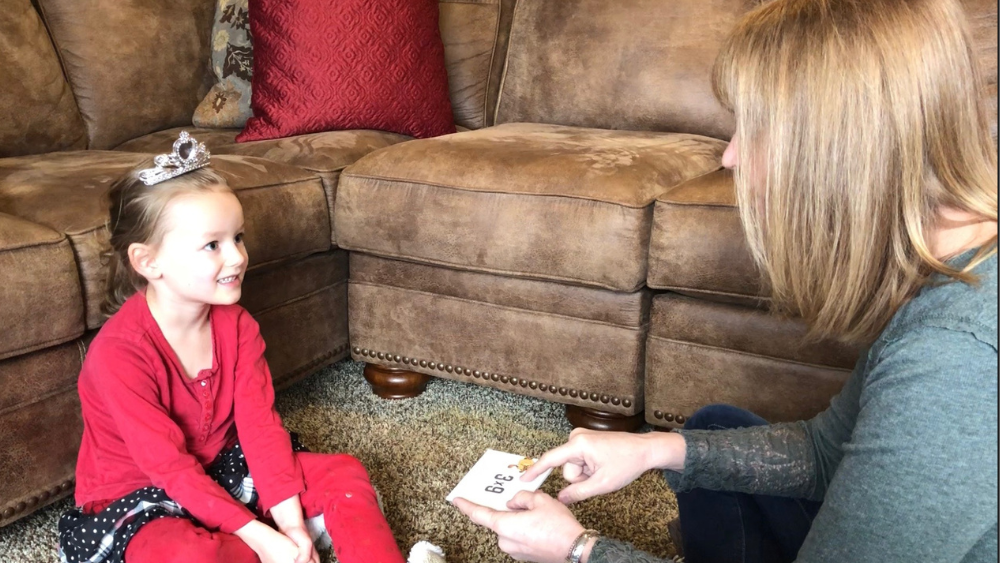
Annie taught middle school math for years before homeschooling her five kids.
And she told me something that changed how I think about “knowing” math facts:
“By a large margin, the kids who hate math generally have one thing in common—they don’t know their multiplication facts.”
But then she said something that made me stop in my tracks:
“If it takes longer than 2-3 seconds for them to come up with a response, even if what they eventually say is correct, then they don’t KNOW their multiplication tables.”
Wait. What?
Even if the answer is correct?
Yes. Even if the answer is correct.
The 2-3 Second Test
Here’s what Annie suggested:
Ask your child three random multiplication facts right now.
No warning. No preparation. Just random facts.
“What’s 7 × 8?”
“What’s 6 × 9?”
“What’s 8 × 4?”
Now here’s the important part: how long did it take them to answer?
If they paused for 4, 5, or 6 seconds before answering (even if they got it right), then according to Annie—and I’ve come to completely agree with her—they don’t actually KNOW their facts.
They’re FIGURING their facts.
And that makes all the difference in the world.
Why This Matters So Much
“But they got the right answer!” you might be thinking. “What does it matter if it took a few extra seconds?”
Here’s why it matters:
It’s that constantly having to think about what 9 × 6 is that is causing your child to not enjoy math.
Imagine trying to read a book, but for every third word, you had to stop and sound it out. You’d get the meaning eventually, but:
– Reading would be EXHAUSTING
– You’d lose the flow of the story
– You’d probably start to hate reading
– You’d avoid it whenever possible
That’s what math feels like for kids who have to pause and figure their facts.
They’re using up all their mental energy on the BASIC stuff (the facts), leaving nothing left for the ACTUAL PROBLEM they’re trying to solve.
The Quicksand Effect
Annie calls this “slogging through quicksand.”
Every math problem becomes a multi-step ordeal:
1. Read the problem
2. Figure out what operation to use
3. Set up the problem
4. Wait…what’s 7 × 8? Let me think…
5. Okay, got it, now what was I doing?
6. Oh right, now I need to…
7. Wait, what’s 6 × 9? Hold on…
By the time they’ve figured all the facts involved, they’re mentally exhausted and frustrated.
And they haven’t even gotten to the interesting part—the actual problem-solving!
Another great metaphor: they’re “swimming upstream with snow boots on.”
The facts they don’t REALLY know are the snow boots. Dragging them down. Making everything harder than it needs to be.
"But They 'Know' Them Eventually!"
I hear this objection a lot:
“My child can figure them out. They use tricks or strategies. They eventually get the right answer. Isn’t that good enough?”
And look, I get it. It’s better than nothing!
But here’s the hard truth: if they’re still using tricks or strategies to GET to the answer, those facts aren’t automatic.
And if the facts aren’t automatic, then:
– Math homework takes 3× longer than it should
– Your child gets frustrated and overwhelmed
– They start to believe they’re “bad at math”
– They resist, avoid, and eventually hate math
– Their confidence tanks
– Other subjects that need math (science, coding, etc.) become harder
All because those facts are taking 5 seconds instead of 2.
The Secret to Confidence in Math
Annie put it perfectly:
The secret to confidence in math is absolute mastery of times tables. Kids need to be SOLID on these facts or doing their math lessons will feel like sheer torture. They’ll have to think too hard, they’ll bog down, they’ll take on the belief that they’re just plain dumb!”
Absolute mastery.
Not “pretty good.”
Not “they can figure it out if they think about it.”
Not “they know most of them.”
MASTERY.
Where the answer pops into their head automatically, within 2-3 seconds, without effort.
What Mastery Looks Like
When your child truly KNOWS their facts:
– The answer comes automatically (under 3 seconds)
– They don’t count, figure, or use fingers
– They don’t need to use a trick or strategy
– They don’t pause to think
– Their brain just…knows
It’s the same way they know their name. You don’t see them pause and think about it. They just know.
THAT’S what we’re after.
Because when they have that foundation:
– Math problems feel manageable instead of overwhelming
– Their brain has energy left for actual problem-solving
– Homework that took 45 minutes now takes 15
– They start to believe they’re actually GOOD at math
– Confidence replaces frustration
– They stop resisting and start engaging
The Brutal Truth About "Learning" Times Tables
Most kids who have “learned” their times tables haven’t actually mastered them.
They’ve memorized some. They use tricks for others. They can eventually figure out the rest.
But truly KNOWING them—where every fact is automatic and effortless?
That’s incredibly rare with traditional teaching methods.
And that’s exactly why so many kids struggle with math later.
Why Traditional Methods Don't Create Mastery
Traditional times table teaching usually looks like:
– Memorize the 1s (easy!)
– Memorize the 2s (okay!)
– Memorize the 3s (getting harder…)
– Memorize the 4s (ugh…)
– By the time they get to 7s, 8s, and 9s, they’re exhausted and discouraged
The kids who have good rote memory skills? They do okay.
Everyone else? They struggle, they fake it, they develop workarounds.
And 5 years later, they’re still pausing for 5 seconds when you ask them 7 × 8.
How MathHacked Creates REAL Mastery
Our approach is completely different.
Instead of:
– Rote memorization (boring and doesn’t stick)
– Going in numerical order (puts the hardest in the middle!)
– Requiring sitting still and drilling
We use:
– Pattern recognition (engaging and sticky)
– Strategic sequencing (easiest first, hardest last)
– Mental gymnastics (strengthens the mind itself)
And here’s the result: kids develop AUTOMATIC recall. Not figuring. Not tricks. Just…knowing.
The facts become as natural as knowing their own name.
Take the Test Right Now
Before you read another word, I want you to try this:
Ask your child three random multiplication facts.
Time them.
If any answer takes longer than 2-3 seconds, you’ve identified the problem.
And honestly? Identifying the problem is half the battle.
Because now you know:
– It’s not that your child is “bad at math”
– It’s not that they’re not trying hard enough
– It’s not that you need to drill them more
It’s that they don’t have MASTERY yet. They have partial knowledge. Shaky facts. Good-enough-for-now answers.
And that foundation? It’s wet cement. You can’t build on it.
The Good News
The good news is this: real mastery is achievable.
Not in years. Not even in months.
Most kids can achieve true mastery—the kind where answers are automatic and effortless—in 2-3 months with our system.
Some do it faster! One mom told us her daughter whizzed through in TWO WEEKS.
And when they’re done, they KNOW them. Not “pretty well.” Not “most of them.”
ALL of them. Automatically. Permanently.
That’s the foundation they need. That’s what makes everything else easier.
That’s what turns “I hate math” into “Can we do more?”
So...How Did Your Child Do?
Did they pass the 2-3 second test?
If yes—congratulations! You’ve got solid facts to build on.
If no—don’t panic. You’re not alone. MOST kids don’t have true mastery, even when they seem to “know” their facts.
The question is: what are you going to do about it?
Because knowing the problem exists is step one.
Fixing it? That’s where the transformation happens.
Did your child fail the 2-3 second test?
Don’t worry — so do most kids. The good news? Real mastery is just 2-3 months away with just 15 minutes a day.
MathHacked was designed specifically to take kids from figuring to KNOWING — so that when you ask 7 × 8, the answer comes instantly, automatically, and confidently. No more pausing. No more counting. Just knowing.
Try it risk-free for 30 days and see the difference real mastery makes.
P.S. Still not sure? Think about this — every second your child spends figuring out a basic fact is a second their brain can’t spend on the actual math problem in front of them. Real mastery frees their mind to soar. Let’s get them there. ❤️