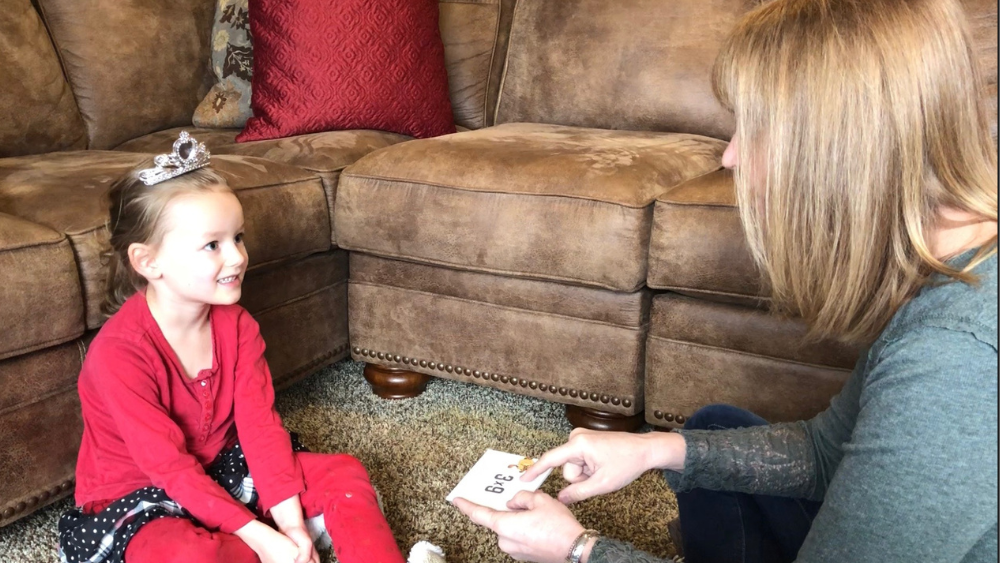
“That’s ridiculous.”
That’s the response I sometimes get when I tell people we recommend teaching times tables before addition.
“By definition ‘multiplication is repeated addition’ so kids need to understand adding as grouping and then form new groups with patterns to understand the underlying idea of multiplication. This will help with algebra in the future.”
I get it. I really do.
It sounds completely backwards. Counter-intuitive. Maybe even irresponsible.
But here’s the thing: I’ve watched it work for hundreds of kids. Including my own. Including kids who were failing math. Including kids who had learning disabilities. Including kids as young as 5 and as old as 16.
So let me tell you why we do it this way—and why it might be the smartest “backwards” thing you ever do for your child’s math education.
The Problem with “Logical” Sequence
Traditional math education goes: Addition → Subtraction → Multiplication → Division
Makes sense, right? Simple to complex. Basic to advanced.
Except there’s a massive problem with this approach: it creates bad habits that are incredibly hard to break.
When you teach addition first, what do kids naturally do? They count on their fingers.
And that seems harmless at first! It’s cute when they’re little. It’s concrete. It helps them visualize.
But here’s what happens next: that finger-counting becomes a crutch they literally cannot let go of.
I was an honor student. I tutored math in college. And I STILL counted on my fingers under the desk. I just got really good at hiding it.
I’ve had friends tell me they use their toes too. One woman told me she has to take her shoes off sometimes to count!
This isn’t because we’re “bad at math.” It’s because we were taught a method that creates dependency.
What Happens When You Start with Multiplication
When you start with multiplication THE MATHHACKED WAY (this is key—not just any multiplication method), something different happens:
The child’s brain becomes the tool.
Not fingers. Not beads. Not counting blocks. Not songs they have to replay in their head.
Their BRAIN.
From day one, they’re using mental patterns. Mental associations. Their own powers of figuring.
And here’s what’s magical: when they later learn addition and subtraction, they already have this mental muscle built up.
They’re more likely to figure in their heads instead of reaching for their fingers.
The habit of using internal mental processes is already established.
"But Isn't Multiplication Just Repeated Addition?"
Yes, technically multiplication IS repeated addition.
But does a 6-year-old need to understand that conceptually to successfully learn their times tables?
Absolutely not.
One of the key principles we use in MathHacked is what we call “as little as possible, as much as necessary.”
We don’t spend time giving kids a conceptual understanding of multiplication until AFTER they already have the skill and can easily put it to use.
Why?
Because all they know or care about before this is that they’re having a really great time and feeling smart.
That’s what matters. That’s what creates the foundation.
The conceptual understanding? We add that back in later, when they’re ready. When they have the confidence and the skills to appreciate it.
What About the Research?
I’m not a certified teacher. I’m a homeschool mom who stumbled onto something that worked and then spent 30 years refining it.
But you know what? The research backs this up.
From US News & World Report: “Too much emphasis on rote memorization inhibits students’ abilities to think about numbers creatively, to build them up and break them down. Low-achieving students tended to memorize methods and were unable to interact with numbers flexibly.”
FLEXIBLE thinking with numbers is the goal.
And starting with multiplication—taught the right way—creates that flexibility faster than the traditional sequence.
But What If They're Already Learning Addition?
This is the most common question I get: “My child is already 8/9/10 and has been working on addition for years. Is it too late?”
Here’s my answer: If their facts aren’t solid and automatic, I’d actually stop the addition work and start fresh with multiplication.
I know that sounds radical. But here’s why it works:
When they master multiplication and division FIRST (which takes about 2-3 months with our system), they come back to addition and subtraction with:
– A flexible mind that’s been trained in mental gymnastics
– Confidence that they CAN learn math
– No dependency on finger-counting
– The ability to figure in their heads
They make up whatever time you “lost” within weeks—and they do it with solid understanding and confidence they didn’t have before.
Real Results from Real Families
“My 11-year-old has most of his multiplication down and is working on division and fractions now. Should I still do this?”
My answer: YES.
Here’s why: even kids who “know” their facts often don’t know them SOLID and COMPLETE. If you ask them a random fact, there’s a pause. Maybe just 2-3 seconds, but it’s there.
That pause? That’s mental energy being used that should be freed up for higher-level thinking.
I’d still put my 11-year-old through it so the facts are solid and complete…and so they actually STICK.
One mom shared: “My daughter WHIZZED through in TWO WEEKS alongside 2 others who ‘shouldn’t be learning multiplication’ facts in 1st and 2nd grade. They all had FUN & are EXCITED to master each level. I can’t believe it.”
Another: “My daughter loved how fun MathHacked made it to learn her multiplication facts. Now a year later, when she sees a multiplication problem, she still thinks of the MathHacked tricks that helped her learn.”
The Division "Miracle"
Want to know something that still blows my mind?
When I first developed this system, I thought I’d have to go through the whole process over again for division. Step by step, pattern by pattern, just like with multiplication.
But here’s what actually happened: Division became intuitive.
Instead of having to teach it, kids generally grasped it WHOLE in one lightbulb moment!
Why? Because their minds had been trained to work flexibly with numbers. They’d developed what we call “mental gymnastics”—the ability to jump back and forth between functions.
Division wasn’t a new mountain to climb. It was just…obvious.
The "Backwards" Approach That Actually Makes Sense
So yes, we teach multiplication before addition.
Yes, it sounds crazy.
Yes, it goes against everything you learned in school.
But you know what else?
It WORKS.
It creates kids who:
- Love math from the start
- Develop flexible thinking
- Don’t depend on external crutches
- Discover they’re smart
- Make future math easier, not harder
And honestly? After watching hundreds of kids transform using this method, I don’t really care if it sounds backwards.
I care that it works.
I care that kids who were failing are now succeeding.
I care that parents who were dreading math time are now enjoying it.
I care that the “I’m not smart” labels aren’t forming in the first place.
So yeah, we teach multiplication first.
And we’re not sorry about it. 🙂
Ready to try the “backwards” approach that actually works?
You don’t need to understand the science to see the results — though after 30 years of watching kids transform, we’re pretty confident in it! Try MathHacked risk-free for 30 days and see for yourself. Same parent, same kid — different results.
P.S. If you’re thinking “But my child needs to understand WHY before they can learn HOW,” I hear you. I used to think that too. But 30 years of watching kids learn has taught me something: understanding follows mastery more easily than mastery follows understanding. Let them feel successful first. The “why” comes naturally after.